How to Regulate Your Emotions Using the Window of Tolerance
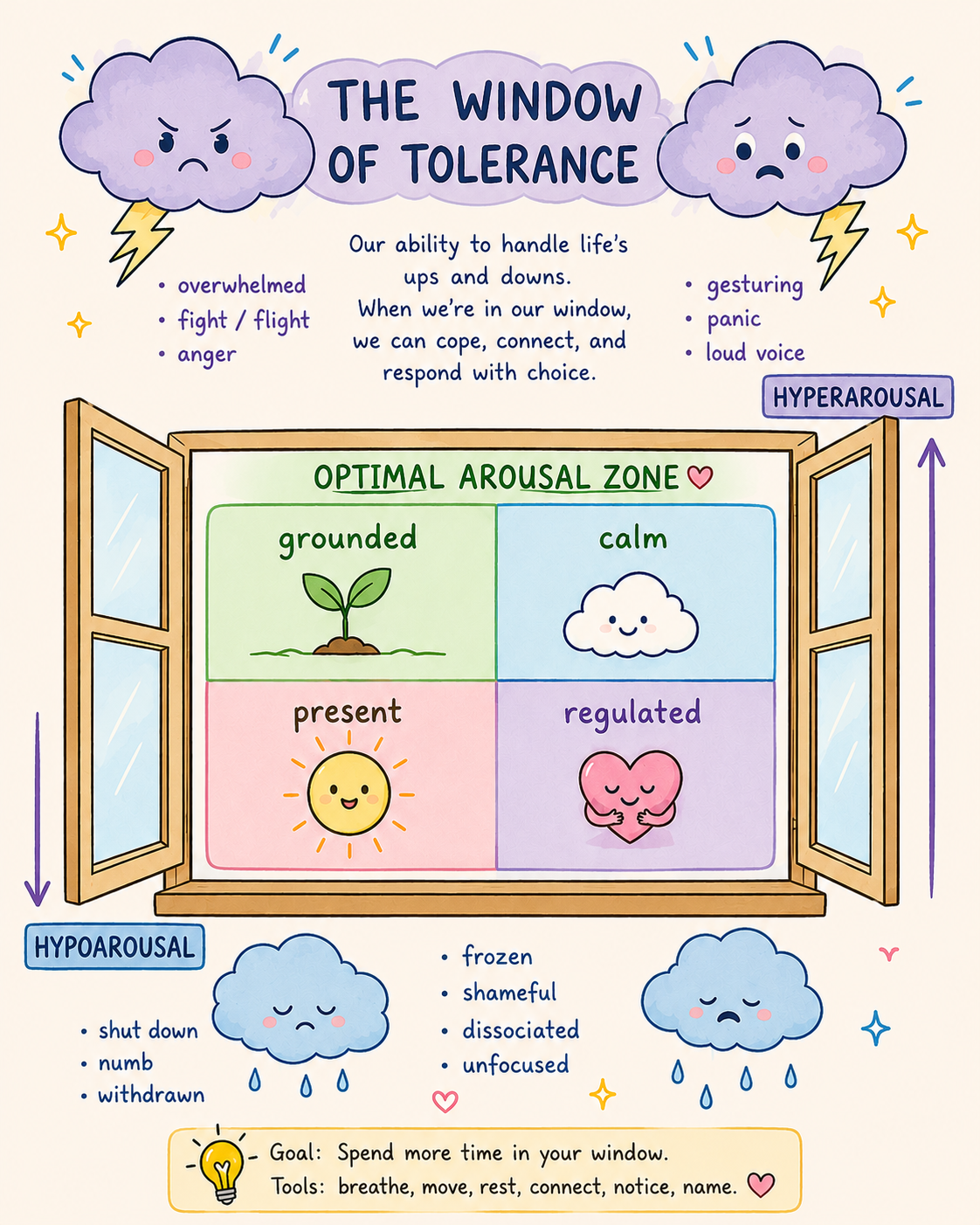
Do you find yourself raising your voice during conflict and saying things you don’t mean? Or maybe you shut down and avoid the conversation, even when you know it would be helpful to engage? If you’ve noticed these patterns and are wondering how to shift them, it can be helpful to understand the window of tolerance—a concept developed by Dr. Dan Siegel.
Your window of tolerance is the zone where you’re able to stay grounded, think clearly, and respond rather than react.
When something upsetting happens or you get into conflict, it can be challenging to stay inside of the window of tolerance. When you get pushed outside of it, you tend to go in one of two directions:
Hypoarousal (shut down)
This is when your system slows way down. You might feel numb, disconnected, spacey, or frozen. It can look like withdrawing, going quiet, or feeling like you’ve “checked out.”
Hyperarousal (over-activated)
This is when your system speeds up. You might feel anxious, angry, overwhelmed, or out of control. Maybe your heart is racing and your thoughts are speeding it. It can look like raised voices, rapid speech, tears, or saying things you don’t fully mean.
For many people—especially those who have experienced trauma—these responses make a lot of sense. If your environment once felt unpredictable or unsafe, your nervous system learned to react quickly to protect you. Over time, that can mean a narrower window of tolerance and a stronger pull toward these states.
Hypoarousal can show up as a freeze or fawn response, while hyperarousal often aligns more with fight or flight. At one point, they may have been essential for emotional survival, even if they don’t serve you in the same way now.
The first step in returning to your window of tolerance is simply noticing when you’re starting to move outside of it. Paying attention to the body sensations and emotions that come up in those moments can serve as a cue to slow down and gently reconnect with yourself. If you’re in conflict with your partner, this might mean taking a pause—whether that’s a few intentional breaths or stepping away for a short break, like 10 minutes, before returning to the conversation.
If you are farther outside of your window of tolerance, you might need a stronger intervention. In order to come back into your window of tolerance, your body here are some things that you can do:
If you’re in hyperarousal (too activated):
Slow your breathing—especially your exhale (longer out-breaths help your body settle)
Lower stimulation (go to a room with a calm environment)
Ground yourself—notice your feet on the floor, or name a few things you can see around you
Engage in journaling: getting your thoughts down can create just enough space to respond more intentionally
If you’re in hypoarousal (shut down):
Gently bring energy back into your body: move your fingers, stand up, stretch, or take a short walk
Engage your senses (sip cold water or smell essential oils)
Use your voice: hum, sing, or read something out loud—this activates breath and engagement
Engage curiosity: ask yourself simple questions about your surroundings (“what’s one thing I haven’t noticed in this room before?”)
Regulating together (co-regulation):
Sometimes it’s hard to come back into your window on your own—and that’s where safe connection can help. Our nervous systems respond to each other, so having the experience of someone giving you their full attention and expressing empathy for you can help bring you back to a grounded place. Read more about co-regulation here.
At the end of the day, regulation is not about never getting activated or shut down—it’s about learning how to notice when you’ve moved outside of your window and gently find your way back, whether that’s through breath, movement, sensory grounding, or safe connection with another person. Over time, these small moments of awareness and grounding practices can help widen your window of tolerance, making it easier to stay present with yourself and others even during difficult moments.